
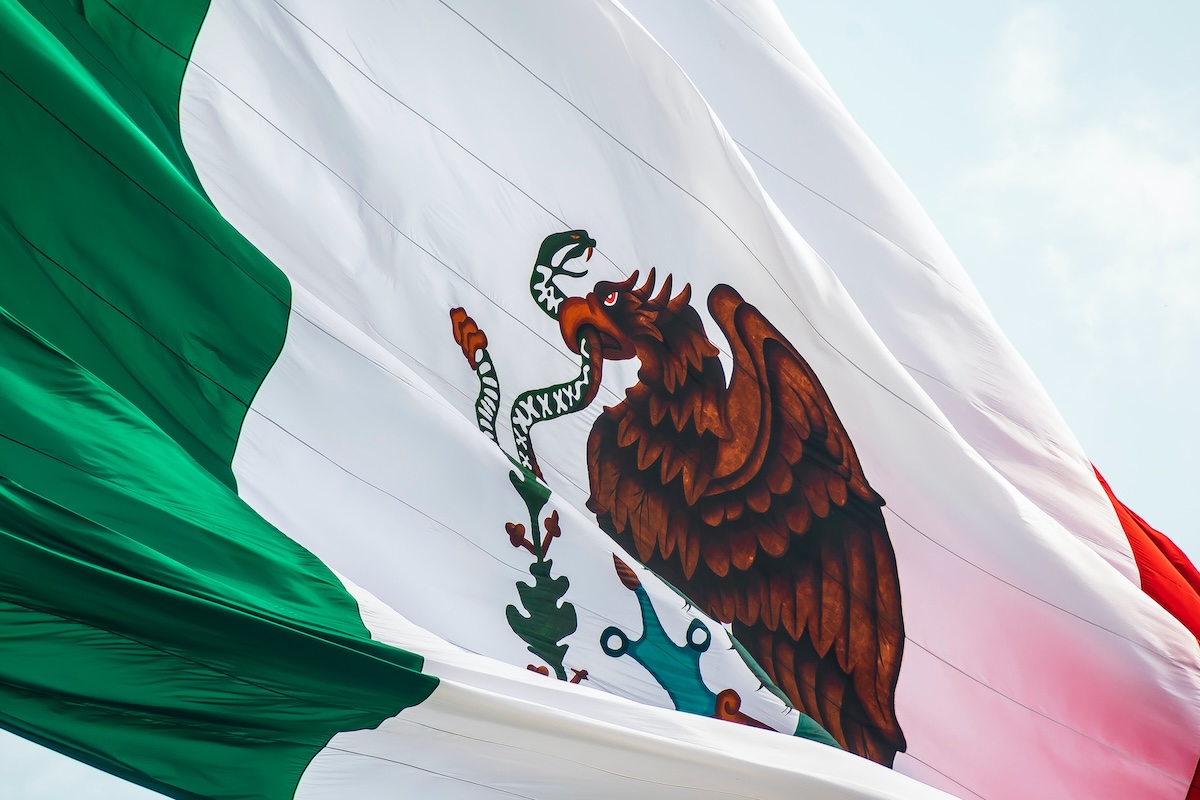
AFP: Mexico a perilous land for migrants heading north

Is Mexico’s new migrant law enough to help those in transit?

Is Mexico’s new migrant law enough to help those in transit?

Marc had Gael Garcia Bernal on board as his presenter, and has produced some excellent advocacy work. “Los Invisibles” (the invisibles) series is beautifully produced and shot, giving voice to a community rarely asked it’s opinion.

To all of those in Mexico and around the world, I thought you might be interested in this post on my generic TheVideoReporter.com site about a documentary film by filmmakers Jennifer Szymaszek and Greg Brosnan making into the final for the Rory Peck Awards.

The remittances that Mexican migrants send home to their families from a recession-bound US has dropped by 14 per cent over the last year.

Central American migrants have long passed through Tultitlán on their way north to the United States because the trains on which the migrants ride north pass nearby. The mayor of Tultitlán says the number of migrants arriving has increased over recent months and wants them deported, but local activist Paty Camarena continues to fight for their rights.

Back in May 2008, U.S Immigration and Customs Enforcement officials rounded up 389 undocumented workers in the Agriprocessors Inc. kosher meatpacking plant in Postville, Iowa. The raid was the largest in U.S history. Two weeks later, filmmakers Jennifer Szymaszek and Greg Brosnan started filming “In the Shadow of the Raid,” a documentary film showing at [...]
Most Mexicans think their lives would be better in the United States, and one in three said they’d move to the U.S. if they could, according to the latest findings on Mexican attitudes from the Pew Global Attitudes Project.

The killing of documentary maker Christian Poveda represents a sad loss for a region much in need of greater understanding.

Mexico’s second annual human rights film festival, supported by a number of organizations here including the Mexico branch of Amnesty International, the Ambulante documentary film project and Mexico City’s Human Rights Commission, opens at the end of the week.

At first glance, “Los Bastardos” seems a surprising film for a Mexican director to make.

The Canadian Embassy in Mexico City’s posh Polanco neighbourhood has been descended upon by thousands of Mexicans since the Canadian government announced on Monday that Mexican nationals now need a visa to travel to Canada.

Mexican nationals will now need a visa to travel to Canada, that country’s minister of citizenship, immigration and multiculturalism, Jason Kenney, announced Monday. Canada decided to stiffen the requirements due to what officials said has been a surge in claims for refugee status by Mexicans. In a news release, Canadian immigration officials said that for the first 48 [...]
Mexican women left behind by husbands who migrate to the United States in search of work were one of the focuses of the documentary “Los Que Se Quedan,” or “Those Who Remain,” by Carlos Hagerman and Juan Carlos Rulfo, which we’ve mentioned a number of times here on La Plaza. In response to those posts, [...]
The money that Mexicans living abroad send home to their families here in Mexico fell again in May, in what the Associated Press calls the biggest monthly decline on record. “Money sent home by Mexicans working abroad fell by 19.9 percent in May, the biggest monthly decline on record as the U.S. recession slashed jobs. [...]
Broadcast live on Ustream, June 24th 2009 Moderator: Lindsey Hilsum, International Editor for Channel 4 News Panel:Ed Vulliamy, Guardian and Observer journalist and writer Alex Tweddle

During that period, 9,758 migrants were deprived of their liberty. More than 60 percent of kidnappings involved groups of migrants travelling together. The majority of those kidnapped were from Honduras (67 %). ¡8% oer the victims were from El Salvador and 13% from Guatemala.

What happened here last week was a sheer massacre.

I didn’t think I was going to be able to make it into work this morning. Not because of Mexico’s overloaded public transport system, but because U.S President Barack Obama was expected to arrive on his first visit to Mexico here in the country’s capital.
“La Vida Loca” reflects a depressing and hopeless reality. The documentary follows some of the members of ”la dieciocho,” the so-called 18th Street gang in a poor San Salvador neighborhood.

The performance wasn’t part of Mexico’s traditional Semana Santa but had a cross-border purpose.
Those Who Remain,’ ‘Round Trip’ scoop prizes at Guadalajara film fest.
The homes that Mexican migrants come from are often a jumping-off point for filmmakers, but Rulfo and Hagerman chose to stay at the point of departure to see how those who remain deal with their reduced numbers.

I’m on the hoof, but wanted to report on some of the films I’ve seen so far here at the Guadalajara International Film Festival.
After writing a song for los Tigres Del Norte about the controversial 670-mile fence project along the U.S.-Mexico border, Cristina Rubalcava got to listening to some of the band’s narcocorridos and created a mural that illustrates phrases from them.
In El Alberto, a small village over 1000km from the border between Mexico and the US, tourists can pay to experience what it’s like being an illegal migrant.
Mexico City’s Museo de la Ciudad is playing host to a photojournalism exhibition — Expofotoperiodismo — that features nearly 50 photos from 2008.

Gael Garcia Bernal and Diego Luna, two of Mexico’s most bankable movie stars, launched the fourth annual Ambulante documentary film festival Friday morning in a packed cinema screening room on Mexico City’s Paseo de la Reforma.
Rosa Jimenez, a 26-year-old Mexican woman, could currently be serving a sentence of 99 years in a Texas prison for a crime she didn’t commit, according to Lucía Gajá, 34, the young Mexican director of the documentary “Mi Vida Dentro (My Life Inside).”
The film takes aim at the United States criminal-justice system and its treatment of Mexican undocumented female migrants. It is told through the case of Jimenez, who crossed illegally into the United States when she was 17 years old. Clearly on the side of the defendant, the film combines the words of Jimenez, her defense lawyers and the prosecution to lay out what ends up a chilling depiction.
“Mi Vida Dentro” debuted in Mexico last week in cinemas across the capital, and is the first feature-length film from Gajá, who is a graduate of CUEC, the cinema program of the Autonomous National University of Mexico. It’s also the first Mexican documentary to be distributed by Ambulante, the film festival created by two of Mexico’s most bankable stars, Gael Garcia Bernal and Diego Luna, in 2006.

A group of Honduran men and women came to Mexico looking for their missing loved ones earlier this year. They claim that there are nearly 600 Honduran migrants who are missing in Mexico who disappeared whilst crossing Mexico to get to the United States.

Immigration, women’s rights, illegal detention and human trafficking are some of the themes that will be examined next week during Mexico’s first human rights film festival.
Mexico’s National Commission of Human Rights appealed to authorities over the weekend to investigate thoroughly the recent killings of a number of journalists here, and to put an end to the impunity for those who murder members of the profession.
Reporters Without Borders issued an appeal to the international community today to provide asylum for journalists fleeing Mexican cities such a Ciudad Juarez.
Jorge Luis Aguirre, director of the news website “La Polaka,” has fled Mexico with his family to the United States after receiving death threats in his home city of Ciudad Juárez, in the northern Mexican state of Chihuahua.
Veteran Mexican crime reporter Armando Rodríguez was shot to death yesterday morning while in his car in the border city of Ciudad Juárez.
The video and photography exhibition Laberinto de Miradas – Labyrinth of Glances – that opened in Mexico City last month in the Cultural Center of Spain – features the kind of images that we are used to seeing in relation to immigration.

“TJ? Really?” was the response from most people last week when they learned I was heading down south of San Diego for a research trip.
They were right to be cautious. I live in Mexico City — one of the biggest, baddest towns around — but still gave Tijuana a second thought. The world’s most famous border city has been getting some bad press of late due to the drug-related violence playing out on its streets.
But what struck me more during my brief trip was the border itself and how it is littered with evidence of its own casualties and conflicts, past and present. The wall is at the center of the current national debate on immigration, and I wanted to see it for myself.
In anticipation of the scheduled debate around the controversial Merida Initiative aid package in the US Senate this week, the Financial Times newspaper from the UK urges President Felipe Calderon to accept the human rights conditions attached to the US$400 billion injection aimed at helping Mexico fights its drugs barons. But should he?

La Caminata Nocturna is a night-hike for tourists in the state of Hidalgo, Mexico that gives them a taste of the illegal immigrant experience. Watch the video here.

Panting for breath, I waded through cow-pat flavoured mud, struggling to keep myself from slipping in the dark. “Vamanos, vamanos, vamanos!” urged my coyote, the Spanish name for people who smuggle migrants across the border into the United States.
The sound of La Migra’s sirens – also known as United States Border Patrol – sounded out behind me. Hands shaking, I stopped to catch my breath and watched the faces of the other migrants crouched in the dark, breathing heavily.
“We know you’re there,” boomed a crackling voice in English, tinged with a Mexican accent, over the loudspeaker. Gun shots rang out.
“What you’re doing is illegal. We have food and water. We can help you get back home.”

Fascinating statistics released yesterday on the demographic makeup of the female Latina community in the United States show some striking, if unsurprising, differences between non-Latina and Latina women, as well as the native-born and immigrant female Latina communities.
Univision: Young angels in Juarez battle the city’s demons
AFP: Mexico City struggles with waste disposal
AFP: Activists under fire in Mexico
AFP: Ambulance attacked in Ciudad Juarez
Time: Evidence of Killings and Disappearances by Mexico’s Security Forces
AFP: Mexicans honor drug war victims on Day of the Dead